Palazzo Filomarino
Cent. 13th-18th
The feudal lord of Palo, the French knight Amerigo Savarini, known as “The Cypriot”, having fought in Cyprus for the Swabian Emperor Frederick II, built the castle which was completed on 26th July 1256 to defend the town which had previously been fortified by the Normans with walls and gates. The fortress was built at the top of the hill, near the edge of the town (Terra Vecchia) and the parish church and it was equipped with double curtain walls, merlons and embrasures, four square corner towers and moats. It was robust and impregnable and in 1349 it survived numerous attacks by the Hungarian army, boosted by fierce soldiers from Bitonto. In 1400 the castle was defined as “Lo falcone de tucte queste contrade” (The falcon of all the towns). After the dominion of the Sforza dynasty from Milan, from the second half of the 15th century until 1557, when Queen Bona Sforza died, her heir, King Philip II of Spain, sold the fiefdom of Palo in 1558 to the son of the viceroy Don Garzia of Toledo and the land then passed to various purchasers until it was bought at auction by the Neapolitan nobleman Tommaso Filomarino, Prince of Rocca d’Aspide. In 1622 the fiefdom of Palo was given in dowry by Don Tommaso to his daughter Isabella Filomarino, bride of the Count of Conversano, Giangirolamo II Acquaviva d’Aragona. Thus began the dominion of the Counts of Conversano over Palo which continued until 1774 when the fiefdom was assigned to the Neapolitan nobleman Giambattista Filomarino, Duke of Perdifumo and Prince of Rocca d’Aspide, honoured with the highest Spanish noble title of “Grande di Spagna”.
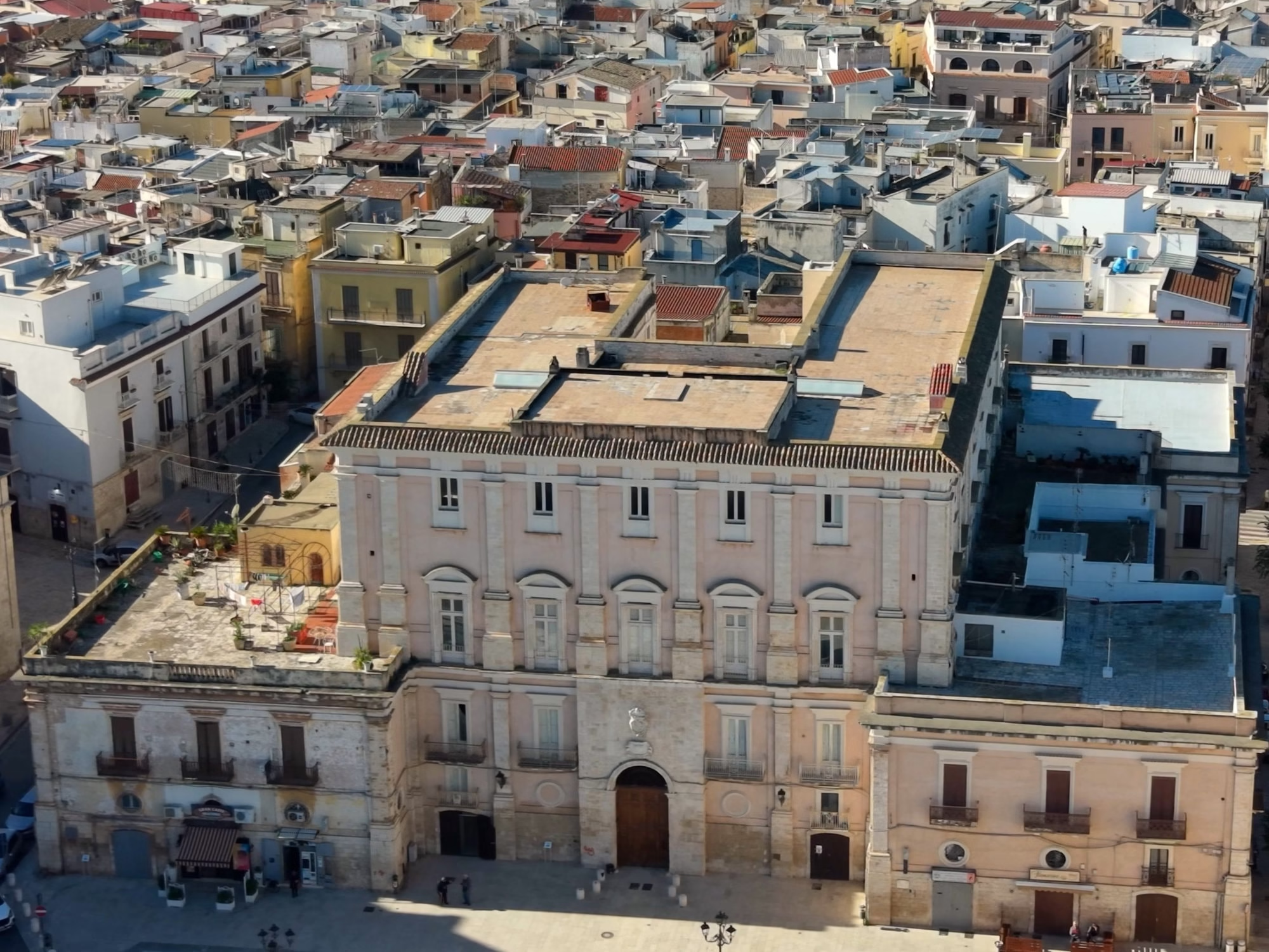
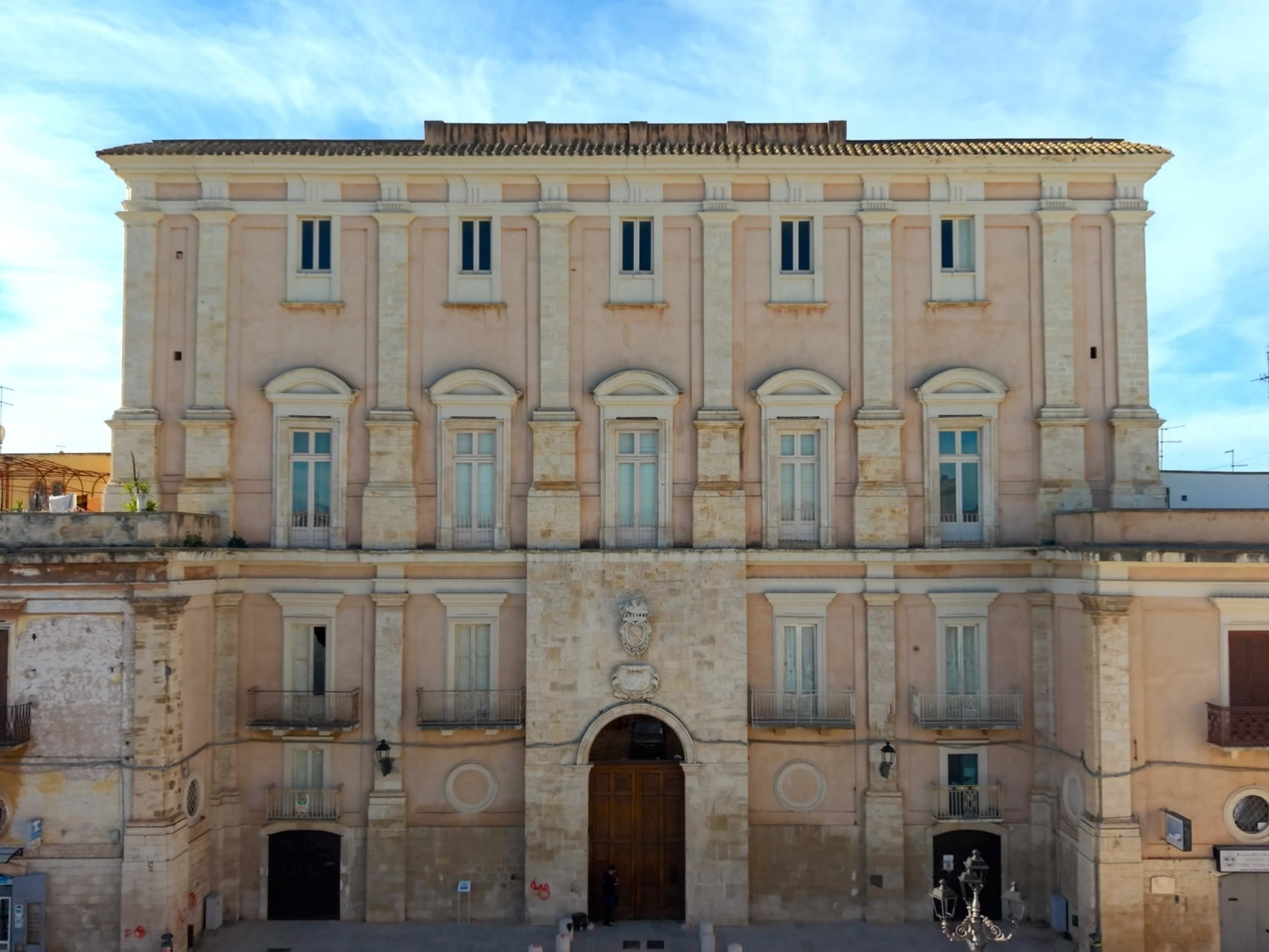
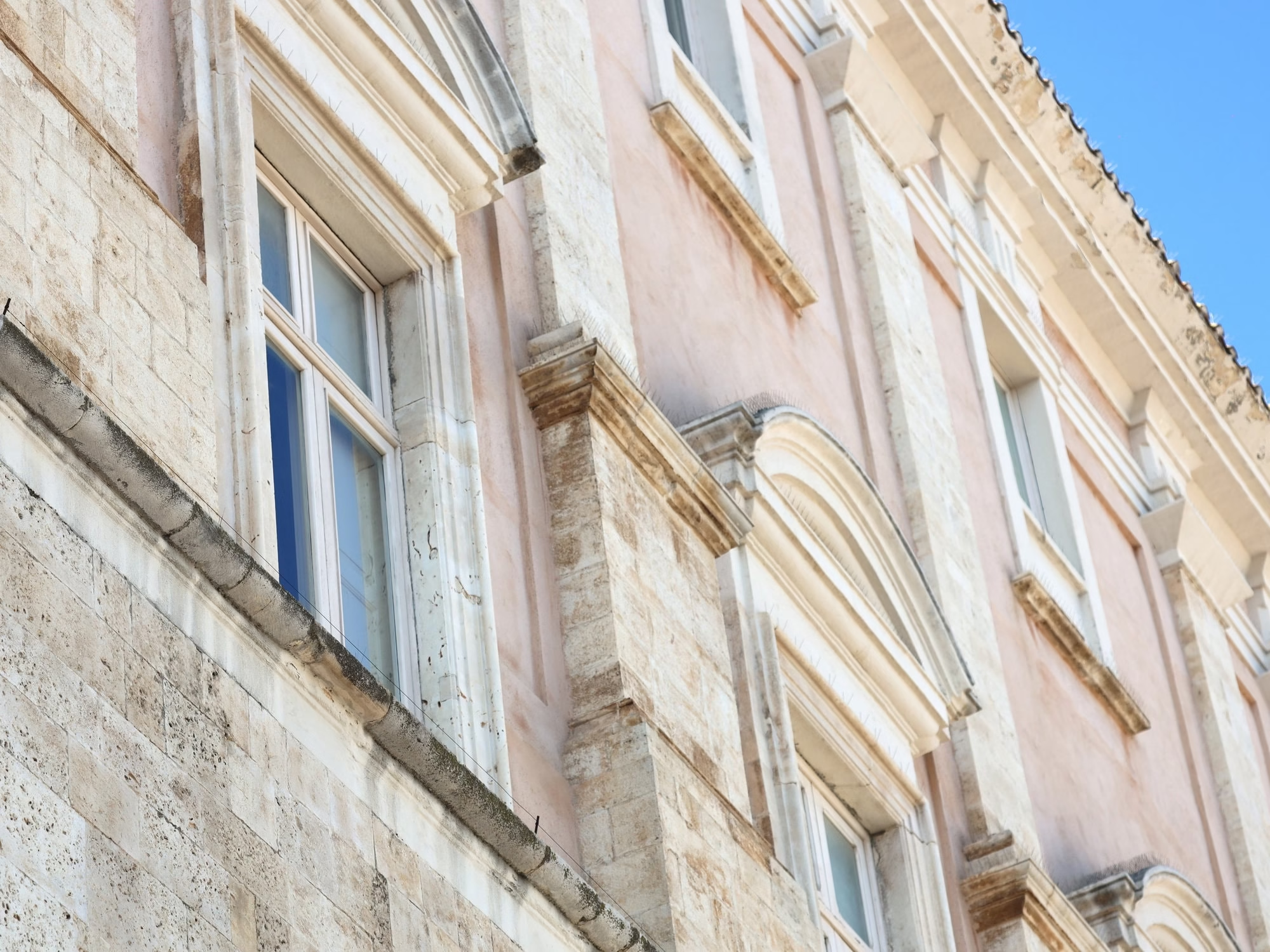
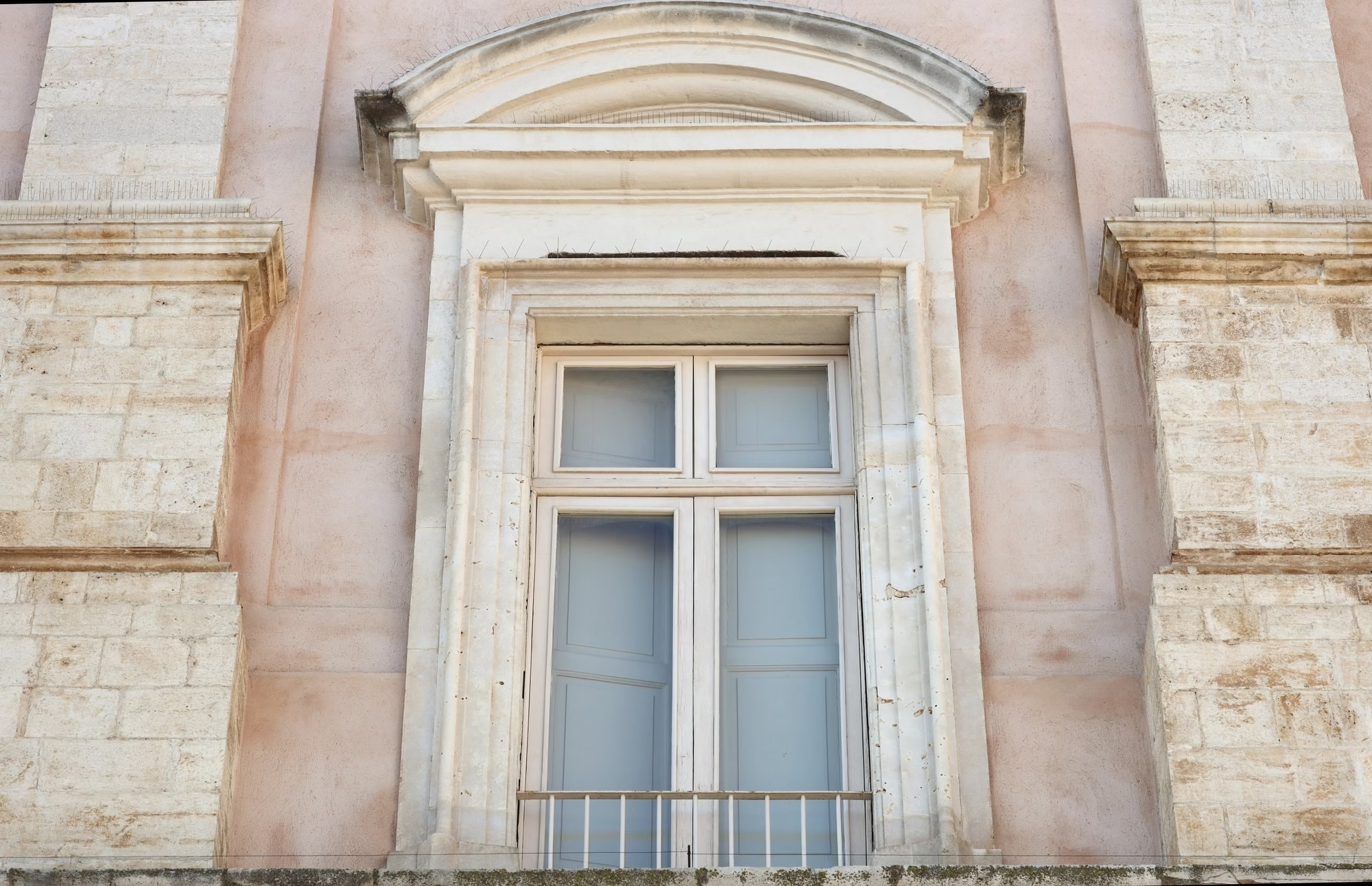
It was Giambattista Filomarino who would leave his mark on the town of Palo, building between 1786 and 1798 a majestic palazzo in Largo del Castello, incorporating elements of the then defunct glorious Swabian castle. The building, which dominates the square, was built in a neoclassical style, reminiscent of Vanvitelli. The main prospect is fairly high with orders of Doric pilasters one above the other, an arched entrance above which is the Filomarino coat of arms (with the inscription “Sat unus”, meaning “one is enough”) and a stone plaque featuring symbols and figures of the zodiac. To the sides of the façade are two square shaped buildings which seem to reproduce the corner towers of the pre-existing castle. Giambattista Filomarino often resided in his palace and was beneficent towards the town, donating in 1793 the main altar in marble to the mother church, as well as donating the painting of Madonna della Porta, situated behind the altar. In April 1800, Giambattista and his son Giacomo were condemned as Jacobins for conspiring against the Bourbon government. In 1806 the abolition of the feudalism of the Kingdom of Naples was decreed, and in September 1809 the Feudal Commission pronounced the sentence that put an end to the centuries-long judicial arguments between Palo and its feudal lords, the Counts of Conversano and the Filomarino family. Giambattista died in Naples in 1810 at the age of 63 and was succeeded by his son Giacomo. In the middle of the 19th century the palazzo was sold at auction to pay off debts accumulated by the owners. But the beautiful and majestic building remains a symbol of the severity and rigour of a ruling power, repressive and exacting but also magnanimous and generous with its citizens, who in memory of the past still call it the “Palazzo del Principe” (Palace of the Prince).