Palazzo De Ribera
Cent. 17th
From the 1400s onwards, Palo began to change. Beyond the old town, the “Terra Vecchia”, enclosed within the medieval walls, the roads became longer, new houses were built and Palo was given new life. A new “pubblica piazza” (public square) took shape, which soon became the hub of the town. Taverns welcomed travellers and merchants; shops sold oil, cheese and other goods and the blacksmith’s hammer echoed alongside the voices of the cobbler and the barber. In the apothecary, similar to a modern pharmacy, the “speziale” mixed herbs and spices with great wisdom, preparing ancient remedies. The square was further improved in 1500 when the Chapel of Santa Maria di Loreto was built at the corner of via Umberto I, unfortunately collapsing in 1820. Every year from 1464 onwards, from 2nd to 10th April, the square teemed with life for the Festival of St. Francis of Paola. Carts and stalls filled the streets, residents and visitors alike were immersed in the shouts and sounds of this much-anticipated moment, when Palo opened its doors to the world. In this square, in 1600, the Palazzo was built that was to take the name of its famous owner, the Neapolitan nobleman Don Francesco De Ribera.
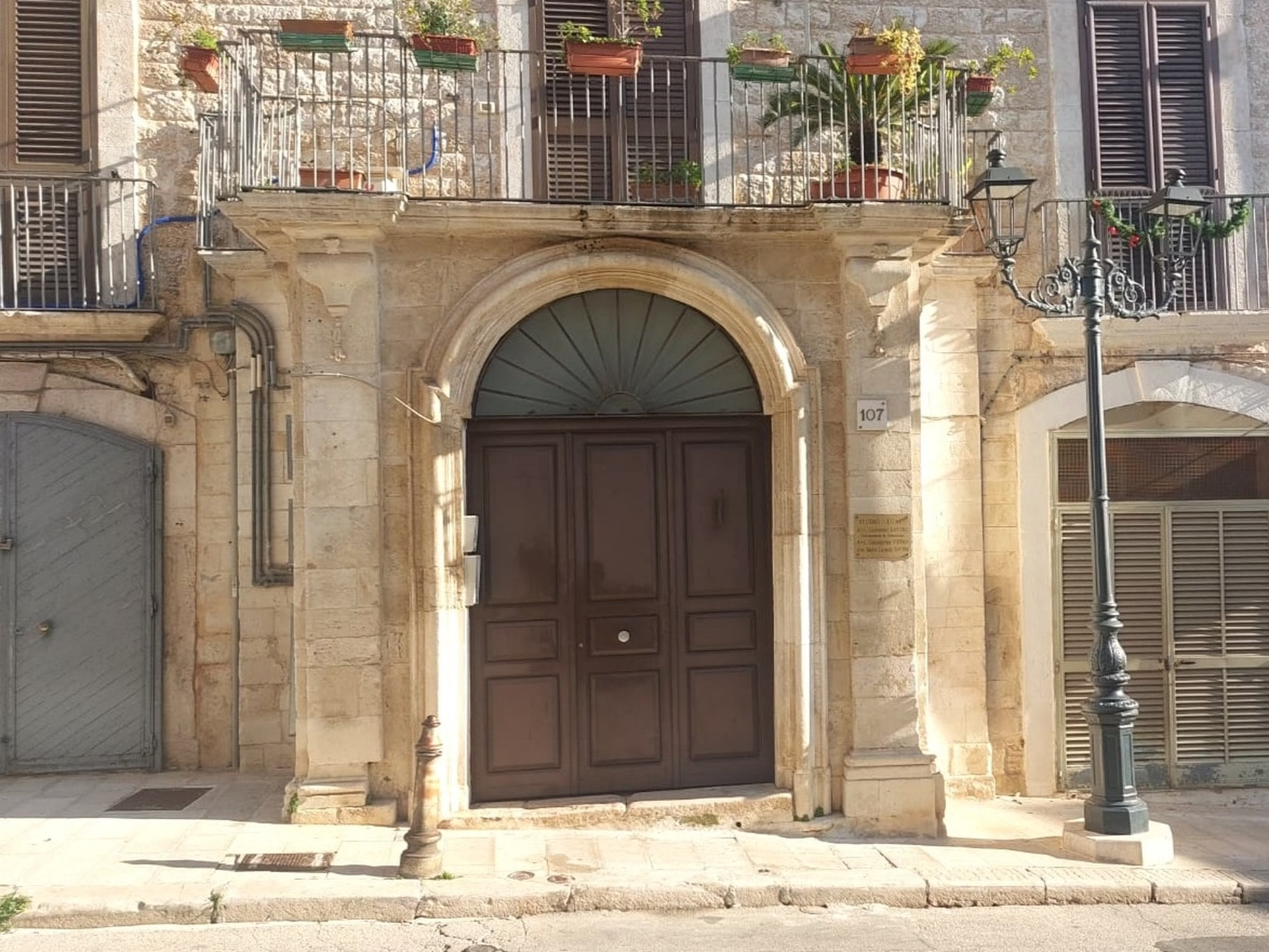
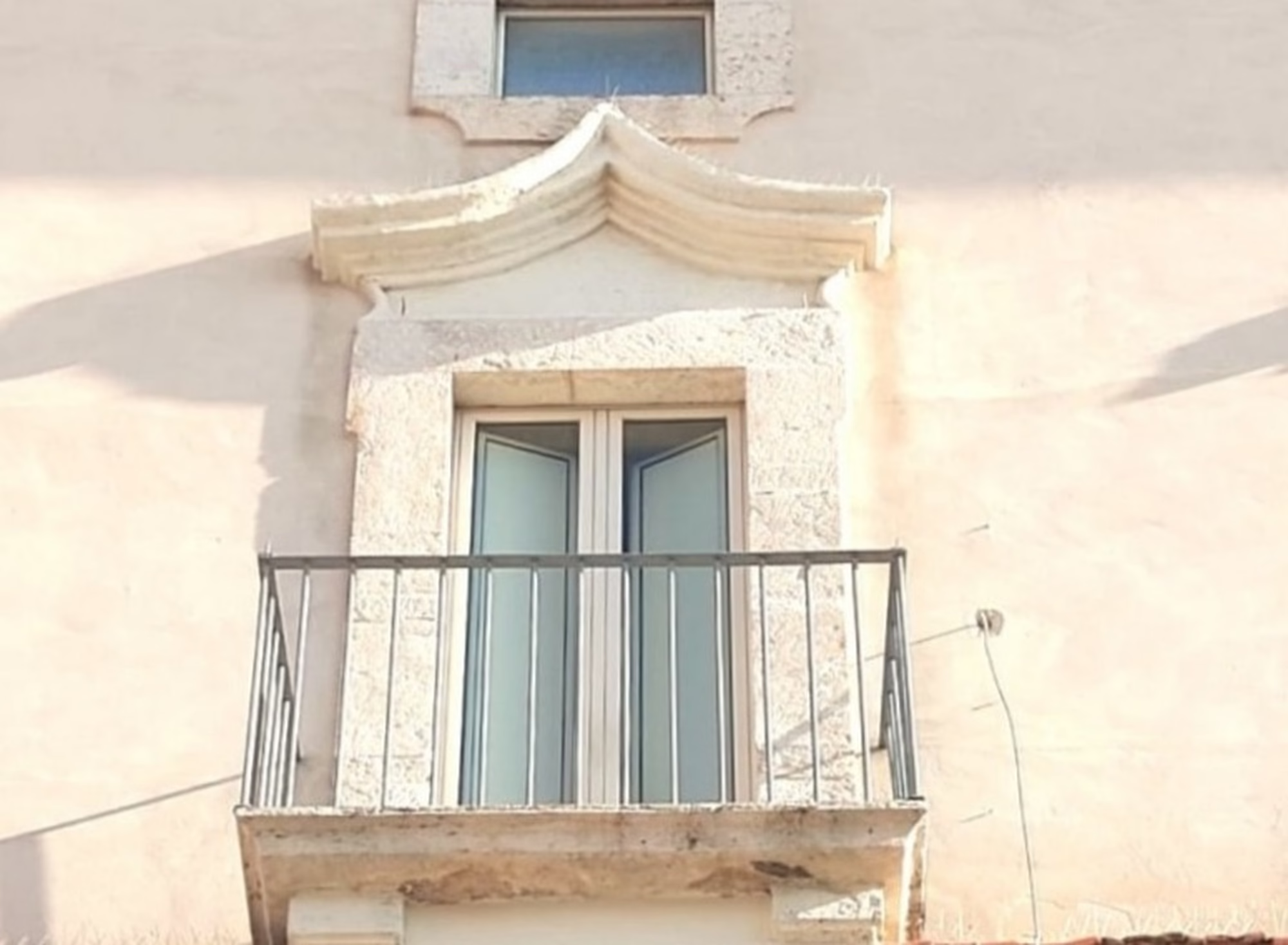
The building had an olive press and stables on the ground floor, and a walled garden at the back. In 1641 it became property of the fearful landowner, the Count of Conversano, Giangirolamo II d’Acquaviva d’Aragona, the “Guercio di Puglia” (the one-eyed man of Puglia). For many years it was the Governor’s House, where town affairs were managed. From the 1700s the ground floor of the building changed several times, alternating between the blacksmith’ workshop, an olive press, stables and then a tavern. For a short time, it was even used as a small prison, with damp cells and barred windows which let the light in. In 1776, the new lord of Palo, Prince Giambattista Filomarino, who had been given the Palazzo, decided to transform it, giving it a new elegance and modernity. This renovation, however, was opposed by the town council, who were attached to the past history of the building. A few years later, in 1792, it changed hands once again, becoming the property of the lawyer Francesco Savino, marking a new chapter in the long history of Palo del Colle.