Our Lady of Constantinople
Cent. 18th
During the iconoclastic persecutions in Byzantium of the 8th century, a group of Basilian monks fled, taking with them precious icons of the Virgin Mary, worshipped with the title of “Theotokos”. Their journey took them to Puglia where they diffused the cult of Our Lady of Constantinople. It is said that there was once a small church dedicated to the Virgin Mary in this spot, later demolished by Dominican monks to make space for the large monastery and church still standing today. On the wall of an old building belonging to the noble Costanza family, an icon of Our Lady of Constantinople was painted in tempera on plaster in memory of that cult. The Virgin is depicted wearing a pink tunic, a blue cloak and a crown. The Baby Jesus is also crowned and is seated on His mother’s lap. In the background, a drape in the shape of a crown is held by two angels.
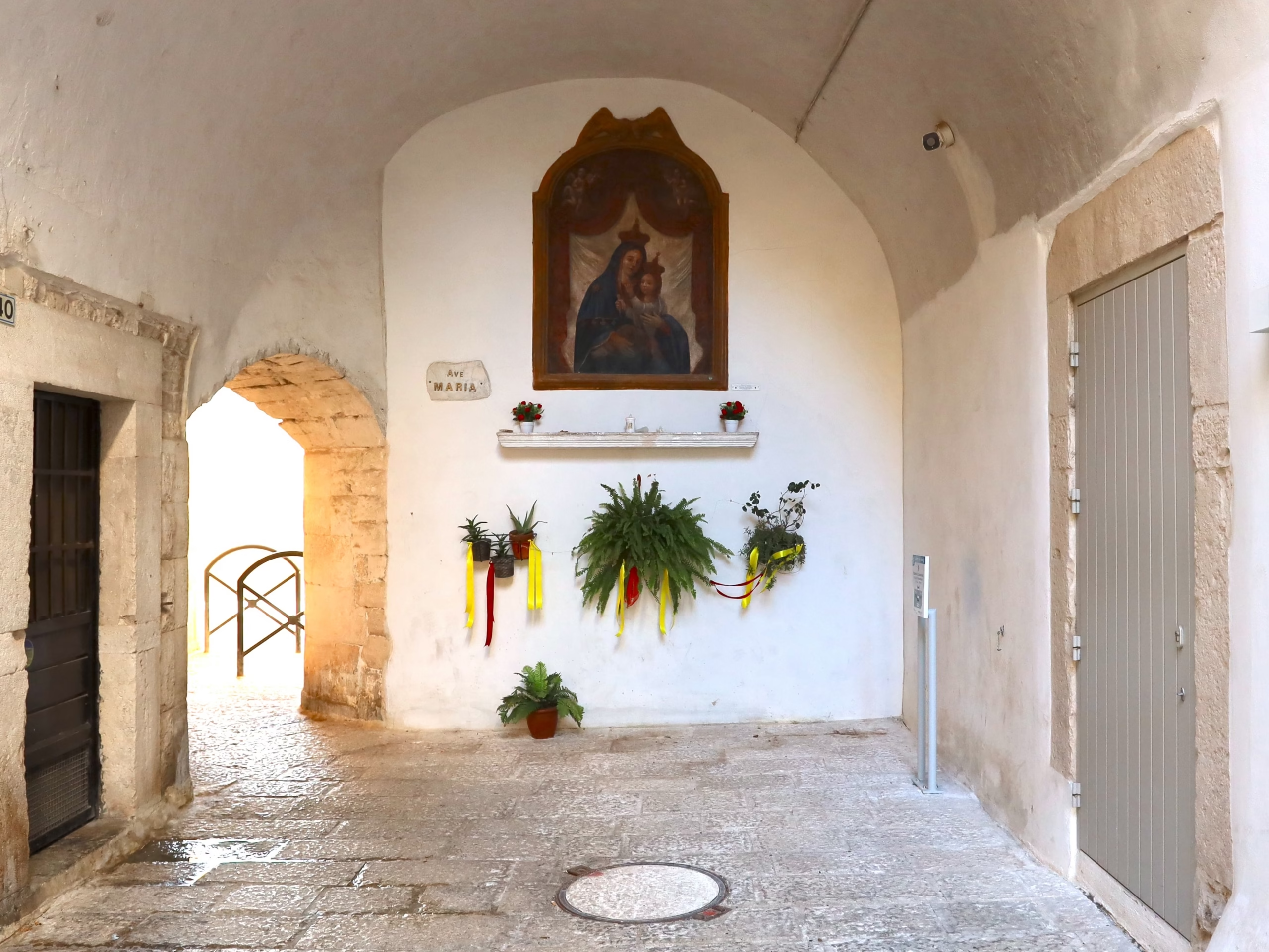
The fresco was inspired by the painting conserved in the church of San Domenico and is framed by an arch dating back to 1700, built in order to connect the convent to the cloister. During the month of May, the women of the neighbourhood would gather under this arch to recite the rosary, according to the Dominican tradition. It was a moment of shared faith which reinforced the relations of the community. The high point of the cult was celebrated on the first Tuesday of March, the day dedicated to Our Lady of Constantinople. On this occasion, the altar was decorated with care, and families set off on foot for the sanctuary of Binetto. The inhabitants of Palo referred to this tradition as “La festa della Madonna della Pastinaca” (The festival of Our Lady of carrots), because the stalls sold mainly carrots, treated as delicacies. The cult of Our Lady of Constantinople continues through faith, memory and popular tradition, uniting past and present, spirituality and everyday life.